Backend Blueprints Powering Seamless Sweepstakes App Performance
Gisela Koch · Aug 5, 2026
Backend Blueprints Powering Seamless Sweepstakes App Performance
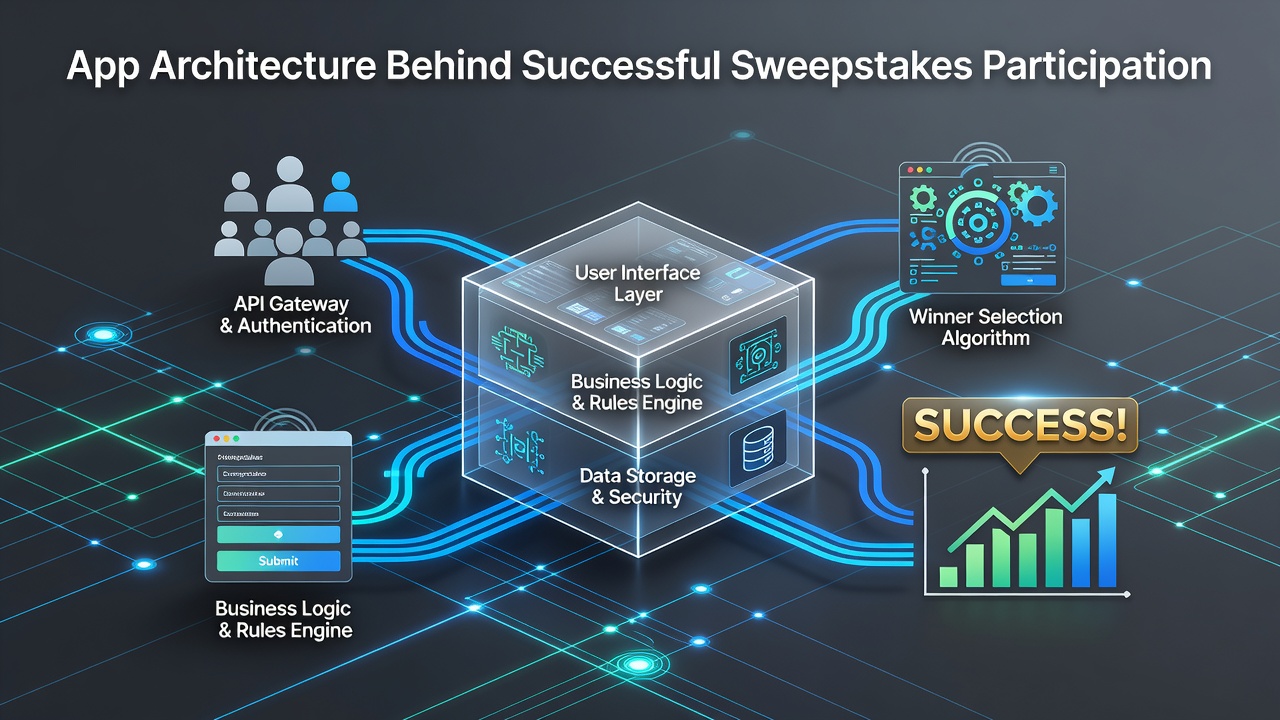
Modern sweepstakes applications rely on layered architectures that combine frontend interfaces with robust backend services to handle millions of concurrent entries while maintaining compliance and speed. Developers structure these systems around microservices that separate user authentication, entry processing, random selection engines, and notification modules so each component scales independently during peak periods such as August 2026 promotional cycles.
Core Layers in Sweepstakes Platforms
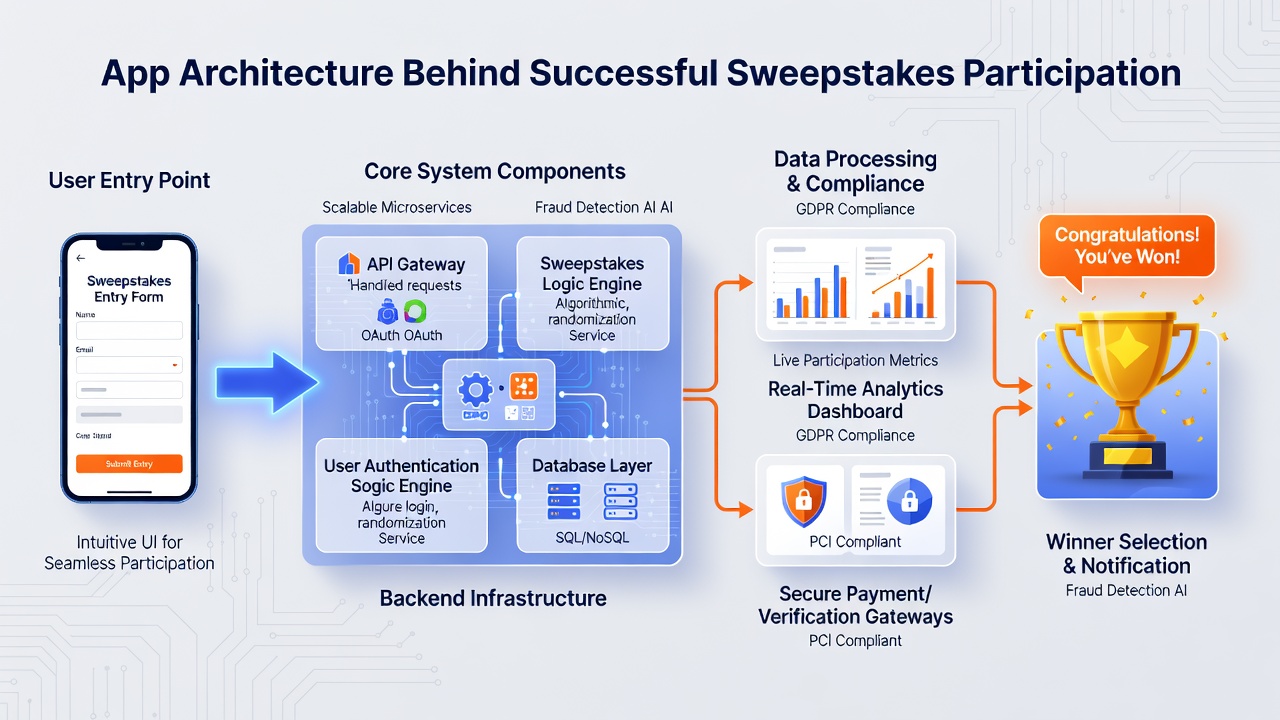
Successful platforms begin with a presentation layer built on responsive web frameworks and native mobile components that capture participant data through secure forms. Behind this sits an API gateway that routes requests to dedicated services handling validation against eligibility rules including age verification and geographic restrictions. Data from these interactions flows into distributed databases that store user profiles, entry timestamps, and transaction logs using sharded architectures to support rapid queries without bottlenecks.
Backend logic incorporates event-driven processing where entry submissions trigger asynchronous tasks for duplicate detection and compliance checks. Container orchestration tools like Kubernetes manage deployment across cloud regions so traffic spikes from viral campaigns do not degrade performance. Observers note that companies adopting this approach maintain sub-second response times even when daily entries exceed previous benchmarks recorded in 2025.
Random Selection and Compliance Integration
Selection mechanisms integrate certified random number generators that meet standards set by bodies such as the National Institute of Standards and Technology. These modules operate within isolated environments audited regularly to prevent predictability while ensuring fairness across all draws. According to reports from the European Gaming and Betting Association, platforms that embed such certified systems experience fewer disputes and smoother regulatory reviews in multiple jurisdictions.
Security protocols wrap every transaction with encryption at rest and in transit while multi-factor authentication protects account access. Audit trails capture every step from form submission to prize allocation so operators can demonstrate adherence to rules during inspections. Researchers at academic institutions have documented how these layered safeguards reduce vulnerability exposure compared with monolithic legacy applications still in use at some smaller operators.
Scalability Patterns and Data Management
Horizontal scaling allows additional server instances to spin up automatically when entry volumes rise during major events. Load balancers distribute traffic while caching layers store frequently accessed content such as prize descriptions and terms to reduce database hits. Developers often combine relational stores for structured data with NoSQL options for logs and analytics so the system balances consistency with flexibility.
Notification services push real-time updates through push channels and email gateways once draws conclude. These components connect to the core selection engine via message queues that guarantee delivery even during temporary outages. Data pipelines feed aggregated statistics into dashboards used by operators to monitor participation trends and adjust promotional parameters without code changes.
Future-Proofing Through Modular Design
Teams continue to refactor older codebases into smaller services that communicate through well-defined contracts. This modularity permits independent updates to the entry validation service or the prize claim workflow when new regulatory requirements emerge in different regions. Platforms that adopted these patterns early report faster time-to-market for feature additions compared with rigid single-codebase predecessors.
Integration with third-party payment processors and identity verification providers occurs through standardized APIs that abstract regional differences. Observers highlight how this abstraction layer simplifies expansion into new markets while preserving core selection integrity. In August 2026 several major operators plan phased rollouts of enhanced biometric options layered on top of existing authentication flows.
Conclusion
Effective sweepstakes participation hinges on architectures that prioritize separation of concerns, certified randomness, and elastic scaling. Companies investing in these foundations deliver reliable experiences that meet both user expectations and oversight demands across evolving regulatory landscapes. Continued refinement of these systems supports growth while preserving the integrity required for sustained operation.