Screening the Sweepstakes: Encrypted Algorithms Shaping Access to Multi-State Casino Draws
Carlo Otto · Aug 23, 2026
Screening the Sweepstakes: Encrypted Algorithms Shaping Access to Multi-State Casino Draws
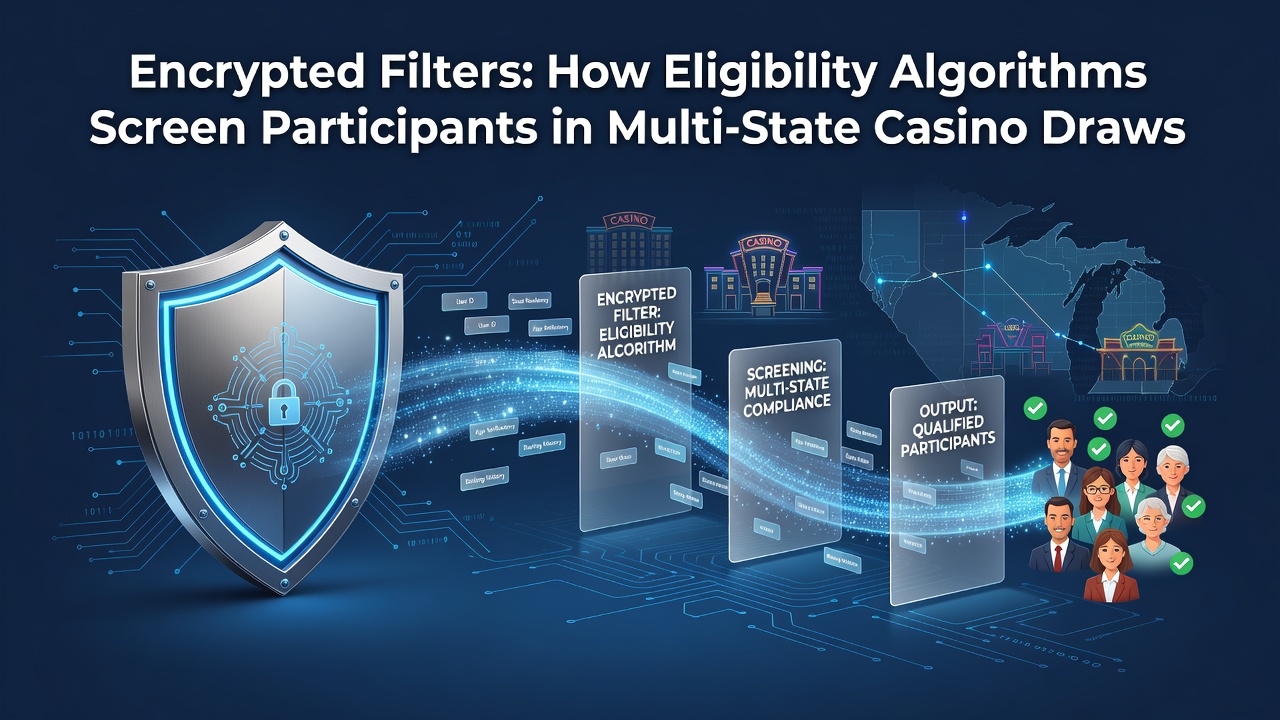
Eligibility algorithms now sit at the center of multi-state casino draws, where encrypted filters verify who can enter and who cannot before any random selection occurs. These systems combine location checks, age verification, and historical participation data into a single encrypted pipeline that runs in seconds. Observers note that such filters prevent duplicate entries and enforce residency rules across jurisdictions where laws differ sharply from one border to the next.
How Encrypted Filters Operate in Practice
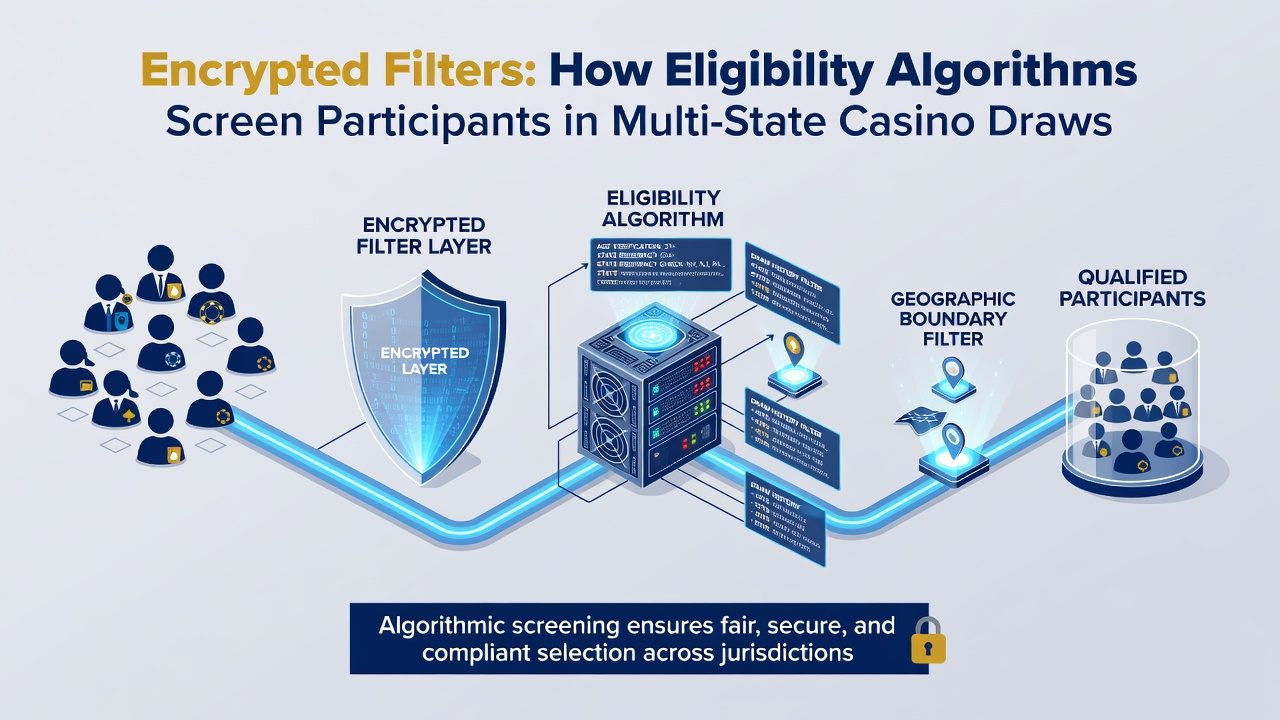
Developers build these filters around homomorphic encryption so that personal details remain protected while still allowing the system to test conditions such as state residency or prior prize claims. Data moves through the algorithm in its encrypted form, and only the final yes-or-no decision emerges in plain text. Researchers at several gaming technology firms report that this approach reduces exposure during transmission between state databases and central draw servers. When a participant submits an entry form, the system hashes the address, compares it against a geofenced map, and checks the encrypted record against a shared ledger of previous winners without ever decrypting the full identity.
Multi-state operators face added complexity because each participating jurisdiction maintains its own exclusion lists and age thresholds. One state might bar anyone who claimed a prize within the past twelve months, while a neighboring state imposes no such limit. The algorithm must reconcile these differences in real time, which it does by loading jurisdiction-specific rule sets that stay encrypted until the moment of comparison. Figures from industry reports show that operators processed more than 14 million such checks in the first half of 2025 alone, with error rates below 0.3 percent according to internal audits.
Geographic and Regulatory Pressures
State boundaries create the most visible test for these filters. An entrant in Illinois may qualify for a draw sponsored by a Nevada-based casino, yet the same person would be excluded if the entry originated from a restricted zip code in another participating state. Algorithms handle this by maintaining an updatable geolocation database that cross-references IP addresses, billing information, and declared addresses. When inconsistencies appear, the system flags the entry for manual review rather than automatic rejection, a step that regulators in several states now require.
By August 2026, several multi-state compacts are scheduled to update their data-sharing agreements, which will require operators to refresh their encryption keys and rule tables. Those updates will also introduce new fields for tracking self-exclusion requests across state lines. Gaming control boards in Nevada and New Jersey have already published guidance documents outlining the minimum encryption standards these systems must meet, and similar documents are under review in Michigan and Pennsylvania.
Technical Standards and Oversight
Standards bodies such as the Gaming Standards Association have issued specifications that define how encrypted filters must log every decision without storing raw personal data. These logs allow auditors to verify that no eligible participant was wrongly excluded and that no ineligible entry slipped through. Independent testing laboratories examine the source code and run simulated entry batches to confirm that the filters behave consistently across different state rule sets. Data from one such laboratory indicates that filter accuracy improved by 18 percent between 2023 and 2025 after the adoption of standardized test vectors.
Academic researchers have examined the statistical properties of these systems in papers published through university gaming research centers. Their work focuses on whether the filters themselves introduce unintended bias into the overall participant pool before the random draw even begins. Early findings suggest that strict residency rules can reduce entry volume from border communities, yet the effect remains measurable only when multiple states enforce identical exclusion periods. Operators adjust their marketing accordingly, directing more resources toward states with fewer restrictions during each draw cycle.
Future Developments Expected by 2026
Updates scheduled for August 2026 will likely incorporate real-time integration with national self-exclusion registries, allowing an encrypted query to check a participant's status across every participating state within a single encrypted transaction. Several Canadian provincial regulators are also exploring similar frameworks, which could extend the model beyond U.S. borders if data-protection agreements are finalized. Industry associations note that these expansions will require additional key-management protocols to keep encryption keys segregated by jurisdiction.
Conclusion
Encrypted eligibility filters have become a standard component of multi-state casino draws, handling the conflicting requirements of different state laws while preserving participant privacy. The systems rely on established encryption methods, regularly audited rule tables, and scheduled updates that reflect new regulatory agreements. As compacts evolve and more jurisdictions join existing frameworks, the underlying algorithms will continue to adapt without exposing raw personal data during the screening process.