Surge Control: Effective Load Balancing Methods for Casino Sweepstakes Entry Systems
Kai Peters · Aug 26, 2026
Surge Control: Effective Load Balancing Methods for Casino Sweepstakes Entry Systems
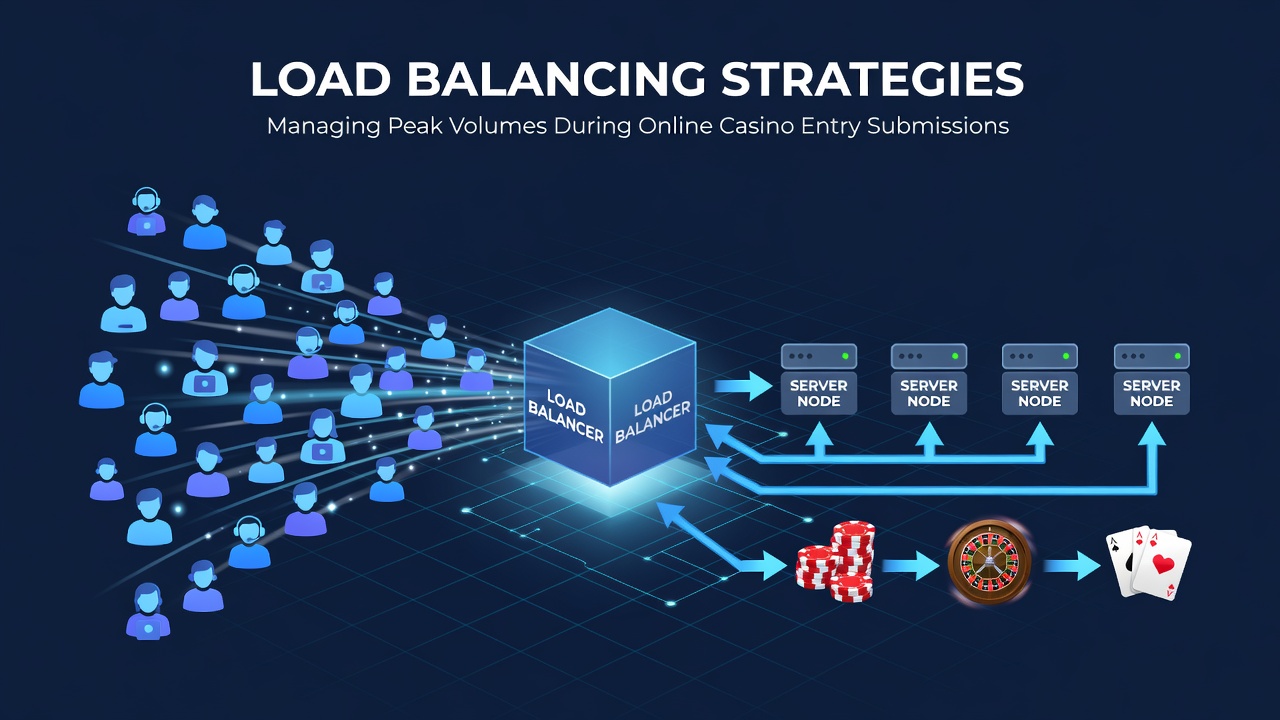
Online casino entry submissions for sweepstakes and promotional draws experience sharp spikes in traffic when new opportunities open, and platforms rely on load balancing strategies to distribute requests across servers without disruption. These approaches prevent overload during periods of intense activity, such as those recorded in August 2026 when multiple draws launched simultaneously across networks. Data from infrastructure reports shows that effective distribution maintains response times while handling thousands of concurrent form submissions per second.
Core Mechanisms Behind Traffic Distribution
Load balancers act as intermediaries that route incoming connections based on predefined rules, and common algorithms include round-robin cycling, least-connections selection, and IP-hash persistence that ties users to specific servers. Research from distributed systems studies indicates round-robin works well for uniform request patterns, whereas least-connections adapts better when submission complexity varies. Observers note that hash-based methods preserve session data during multi-step entry processes, which reduces errors in forms that require sequential validation steps.
Platforms integrate these algorithms into both hardware appliances and software solutions running on cloud providers, and the choice depends on whether the system operates in dedicated data centers or elastic environments. Evidence from operational logs reveals that hybrid setups combining on-premise balancers with cloud scaling layers handle regional surges more reliably than single-tier configurations.
Scaling Techniques During High-Demand Windows
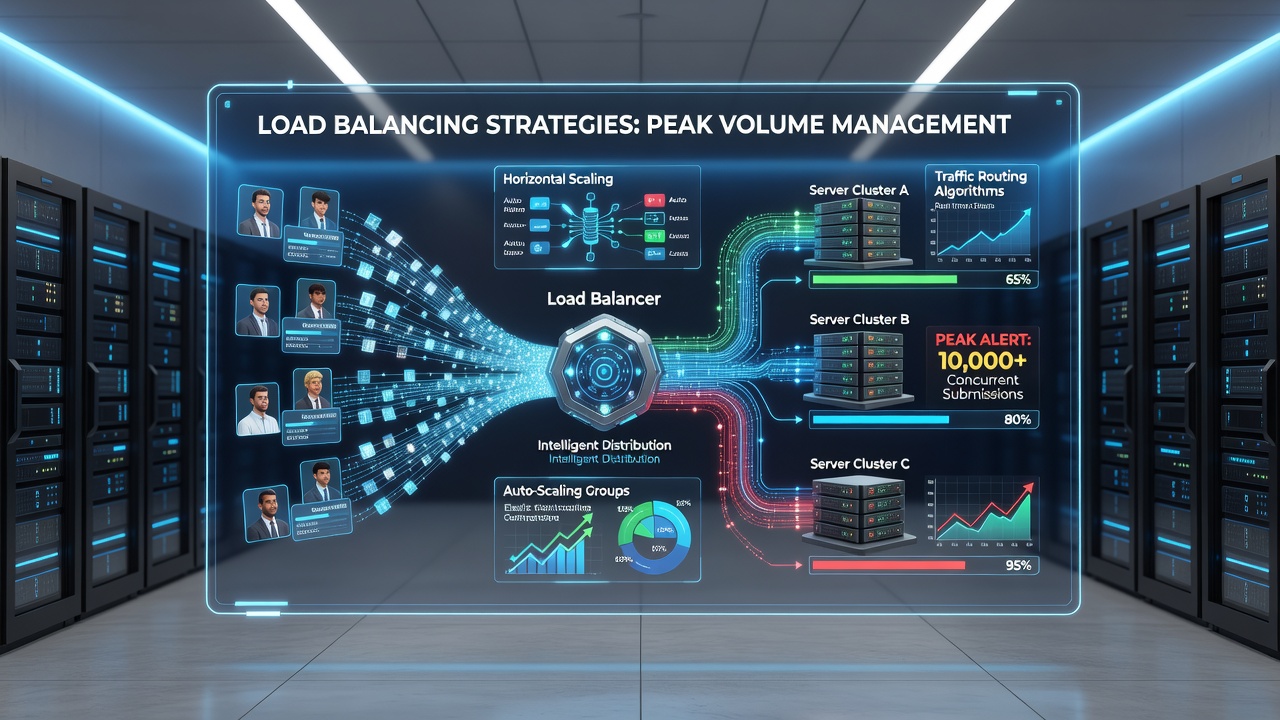
Auto-scaling groups add virtual instances automatically when metrics such as CPU utilization or queue depth exceed thresholds, and this process often activates minutes before anticipated peaks. In August 2026, several networks reported that predictive scaling models based on historical entry patterns allowed pre-provisioning of resources, which kept latency below 200 milliseconds even as submission rates climbed. Those who manage these systems frequently combine auto-scaling with content delivery networks that cache static assets like entry pages and rules documents, thereby freeing backend servers for dynamic processing.
Geographic and Redundancy Considerations
Multi-region deployments place balancers in data centers across continents so that traffic routes to the nearest healthy cluster, and this setup proved valuable when localized events drove unexpected volumes from particular time zones. A NIST report on distributed computing resilience highlights how failover mechanisms reroute requests within seconds of detecting node failures. Redundancy at the balancer layer itself, achieved through active-passive pairs or active-active clusters, ensures continuity if one control point encounters issues during prolonged high-volume periods.
Rate limiting complements load balancing by capping requests per IP address or account, and this measure prevents any single source from monopolizing resources. Figures from industry monitoring services demonstrate that combining rate limits with token-bucket algorithms allows legitimate bulk submissions from affiliate partners while blocking automated abuse attempts.
Monitoring and Adjustment Protocols
Real-time dashboards track metrics including connection counts, error rates, and response latencies, and teams use these indicators to tune balancer weights or trigger manual interventions when automated rules fall short. Studies from academic research groups at institutions such as the University of Toronto show that machine-learning models trained on past traffic data can forecast demand windows with increasing accuracy, enabling proactive configuration changes. Observers note that post-event analysis of August 2026 traffic patterns led several operators to refine their threshold settings for future campaigns.
Security layers integrated with load balancers inspect incoming packets for anomalies, and this dual role protects against distributed denial-of-service attempts that sometimes coincide with legitimate promotional rushes. A ENISA analysis of online service infrastructure describes how Web Application Firewalls positioned behind balancers filter malicious payloads without adding measurable delay to valid entries.
Conclusion
Load balancing strategies for casino entry submissions combine algorithmic distribution, dynamic scaling, geographic redundancy, and continuous monitoring to sustain performance under peak conditions. Systems that implement these elements maintain availability and data integrity across submission surges, as demonstrated during high-traffic intervals in 2026. Continued refinement of these methods supports the growing scale of digital sweepstakes operations while meeting operational and regulatory expectations for reliability.