The Unseen Gateways: Geographic and Demographic Checks in Sweepstakes Verification
Gisela Koch · Jul 22, 2026
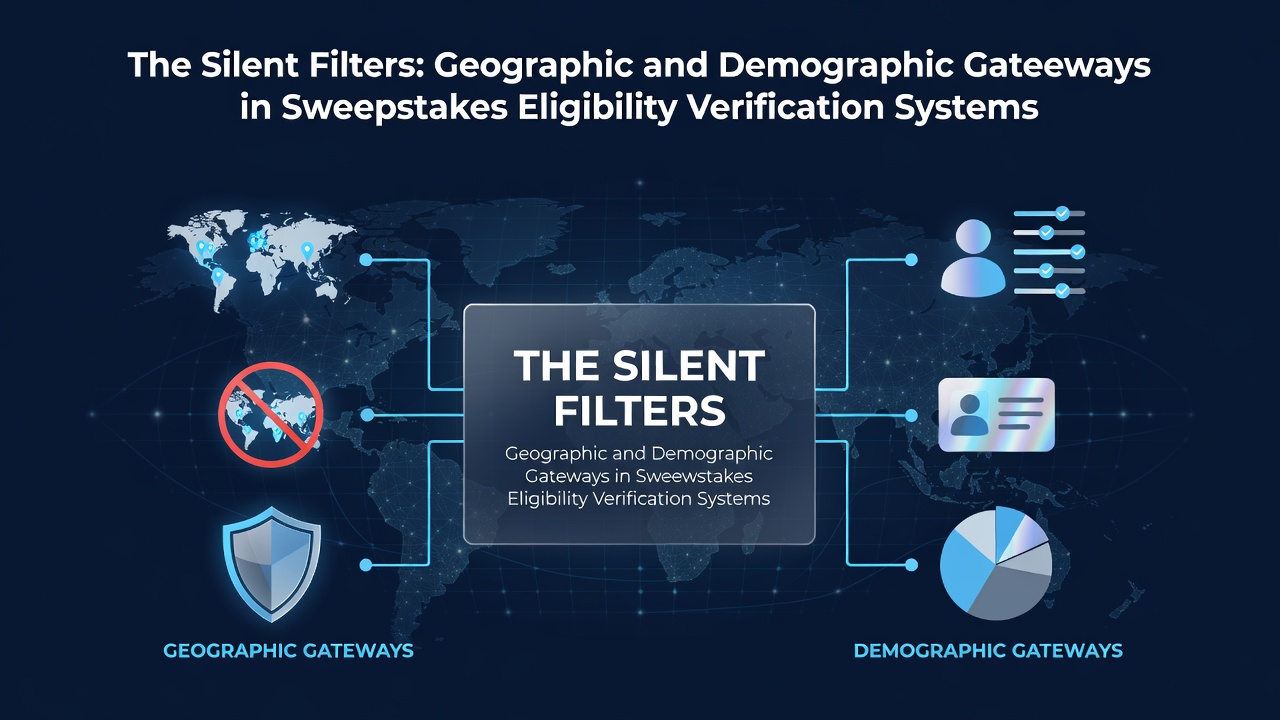
The Unseen Gateways: Geographic and Demographic Checks in Sweepstakes Verification
Verification systems in sweepstakes operate through multiple layers that assess eligibility before prizes reach participants, and these layers often incorporate geographic and demographic data points to comply with legal and operational requirements. Researchers who track online gaming platforms note that backend processes scan IP addresses, residential records, and user profiles to determine whether an entry qualifies under regional laws and platform policies. Such checks run automatically during entry submission or prize claim stages, filtering out participants whose details fall outside permitted zones or categories without any direct notification to the user.
Geographic Filters in Action
Geographic restrictions form one core component of these verification gateways because sweepstakes rules must align with varying state and national regulations on gaming promotions. Systems cross-reference submitted addresses against databases that flag restricted territories, and they supplement this with IP geolocation to detect mismatches that might indicate proxy usage or relocation attempts. Data from industry reports shows that platforms updated their location protocols in early 2026 to incorporate more granular mapping tools, particularly as new mobile entry methods increased the volume of cross-border submissions. Observers note that Canadian provincial rules, for instance, require explicit confirmation of residency within approved areas, while certain US states maintain separate lists of prohibited ZIP codes that verification software applies in real time.
These location checks connect directly to broader compliance frameworks enforced by bodies such as the Federal Trade Commission in the United States and the Australian Competition and Consumer Commission, which both publish guidelines on how promoters must restrict entries by jurisdiction. When a mismatch appears, the system typically blocks the entry or places it in a pending queue for manual review, and this process happens silently before any winner notification stage begins.
Demographic Gateways and Profile Validation
Demographic filters add another dimension by evaluating age, income indicators, and household composition data pulled from public records or self-reported fields. Verification algorithms compare these details against minimum age thresholds set by local laws, and they also scan for patterns that might suggest duplicate entries from the same household. Studies conducted by academic teams at institutions like the University of Nevada, Reno have examined how these checks reduce duplicate claims while maintaining statistical randomness in winner selection across large participant pools. Platforms often integrate third-party services that supply demographic scoring, which helps organizers avoid awarding prizes to individuals in categories excluded by insurance policies or tax reporting rules.
Integration of Data Sources
Modern systems combine multiple data streams during verification, pulling from credit bureaus, voter rolls, and marketing databases to build a composite profile for each entrant. This integration allows filters to activate at different points in the entry lifecycle, such as initial signup or final prize claim, and it creates a layered approach where geographic signals trigger first and demographic signals follow. Those who analyze sweepstakes operations point out that the process relies on secure API connections between the platform and external data providers, ensuring that sensitive information stays encrypted throughout the check sequence.
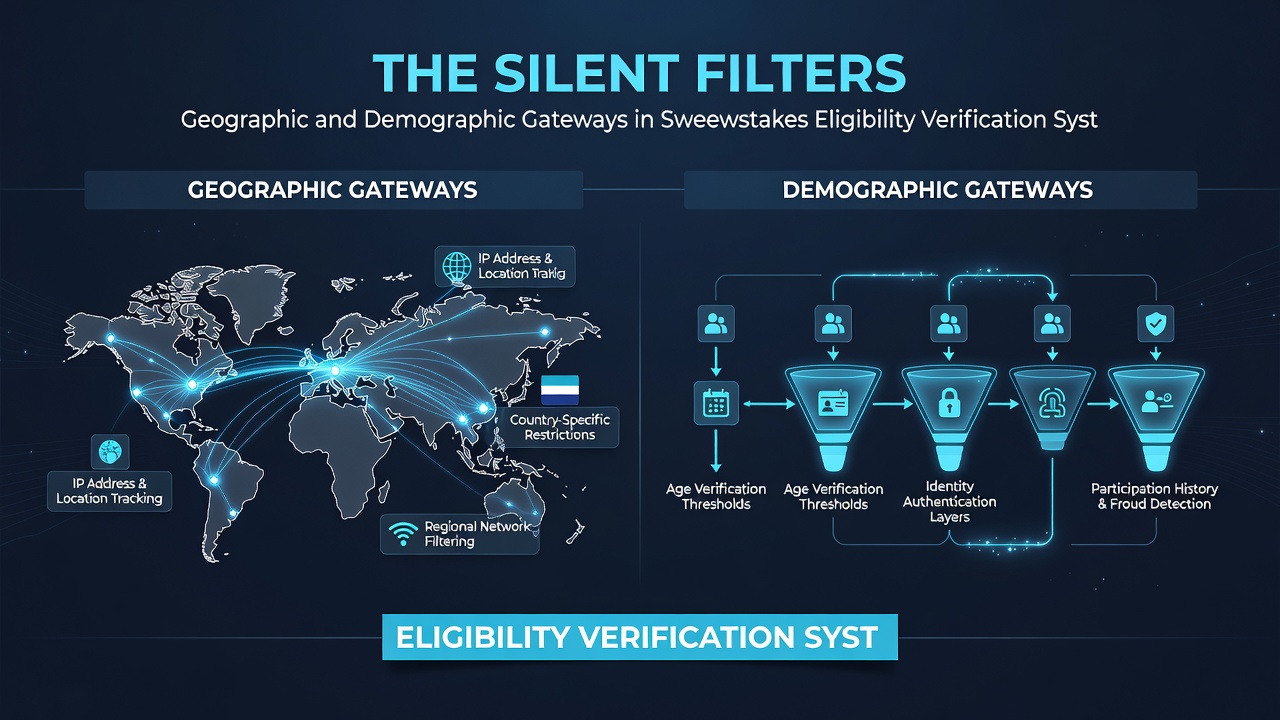
By July 2026, several major operators plan to roll out enhanced verification modules that incorporate real-time biometric elements alongside traditional geographic and demographic checks, aiming to further reduce instances of proxy or shared-account entries. These updates build on existing frameworks already tested in pilot programs across North American and European platforms, where regulatory bodies require documented audit trails for every filtered entry.
Regulatory Context Across Regions
Legal requirements differ sharply by region, which forces verification systems to maintain region-specific rule sets that update whenever statutes change. In the European Union, data protection regulations influence how demographic information can be stored and processed during eligibility reviews, while Canadian federal and provincial statutes emphasize residency verification for cross-border contests. Australian guidelines similarly stress transparent disclosure of geographic limits in official rules, yet they permit automated systems to handle initial screening before human oversight occurs. Companies that manage large-scale sweepstakes therefore invest in modular software architectures capable of swapping filter parameters based on the entrant’s detected location and profile details.
Take one research project that reviewed winners lists from multiple platforms over a two-year period and found consistent patterns where certain demographic segments appeared less frequently due to automated eligibility blocks rather than random chance alone. These findings align with reports issued by trade associations that track compliance costs and system performance across the industry.
Operational Impacts on Participants and Organizers
Participants encounter these gateways most often when attempting to claim prizes or complete registration forms that request additional address or age confirmation. Organizers benefit from reduced legal exposure because the filters catch non-compliant entries early, yet they must balance this efficiency against the need to maintain fair access for eligible users. Backend logs capture every filter activation, creating records that regulators may request during audits or dispute resolutions. The reality is that these silent processes shape the final pool of potential winners long before any public announcement occurs.
Conclusion
Geographic and demographic verification gateways continue to evolve as platforms adopt new data sources and regulatory demands shift. Systems that once relied on basic address matching now incorporate layered profile analysis to meet compliance standards across multiple jurisdictions. Those who study these mechanisms observe steady growth in automation, with July 2026 marking a notable point for planned enhancements in biometric integration and real-time database connectivity. The processes remain invisible to most entrants yet play a central role in determining who ultimately receives sweepstakes prizes.