Tracing Digital Currents: Validating Entries in Global Online Prize Draws
Katja Lange · Jun 17, 2026
Tracing Digital Currents: Validating Entries in Global Online Prize Draws
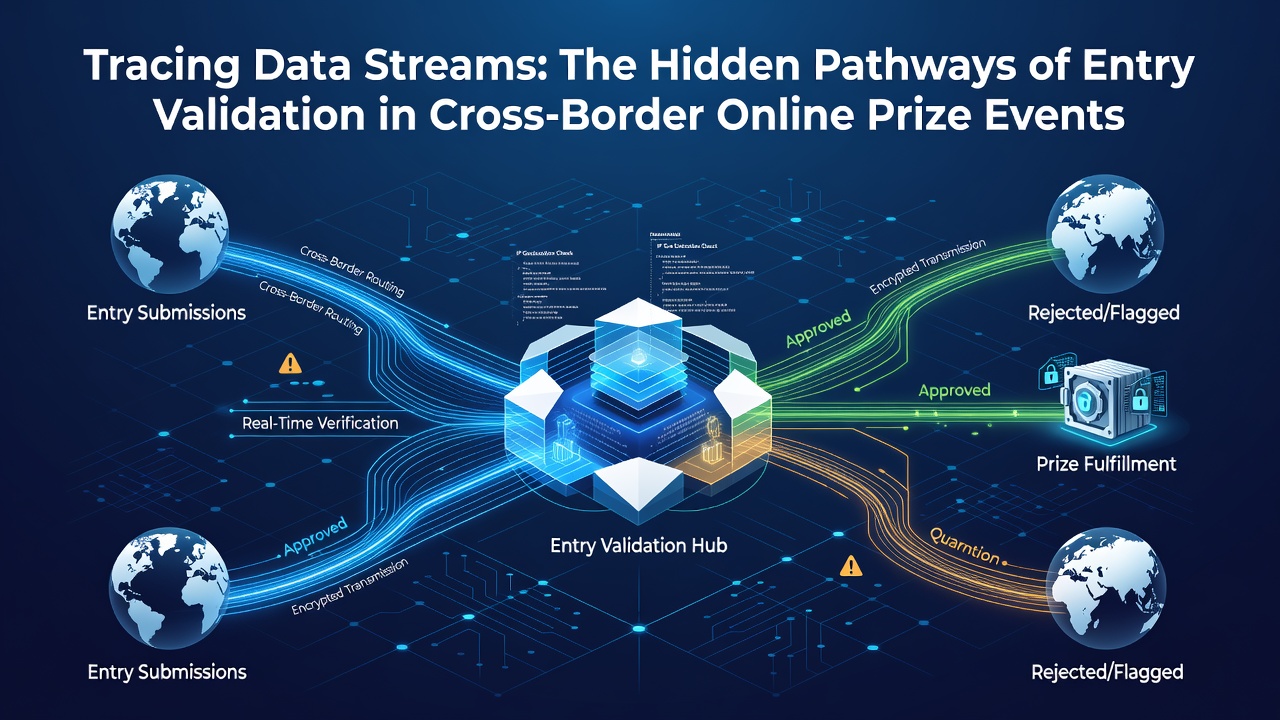
Entry validation in cross-border online prize events follows intricate data pathways that begin the moment a participant submits a form, and these routes incorporate multiple checkpoints designed to confirm eligibility while respecting diverse legal frameworks. Systems process information through secure channels that track IP addresses, device identifiers, and user-provided details against databases maintained by operators and third-party verification services. Data packets travel between servers located in different jurisdictions, each hop adding layers of encryption and logging that create an auditable trail.
Initial Capture and Routing of Participant Data
Participants enter contests through web forms or mobile applications that collect basic identifiers such as names, addresses, email accounts, and sometimes government-issued identification numbers for larger prizes. Once submitted, the information routes through content delivery networks that direct traffic based on geographic origin, and this initial distribution often determines which validation servers handle the request first. Operators maintain logs that record timestamps, source locations, and transmission protocols, allowing later reconstruction of how each entry moved through teh system.
Backend processes compare incoming data against blacklists of previously disqualified addresses or suspicious patterns flagged in prior events. Automated scripts run checks for duplicate submissions from the same device fingerprint, while parallel queries reach out to external services that supply age verification or residency confirmation where required by local rules.
Cross-Border Compliance Layers
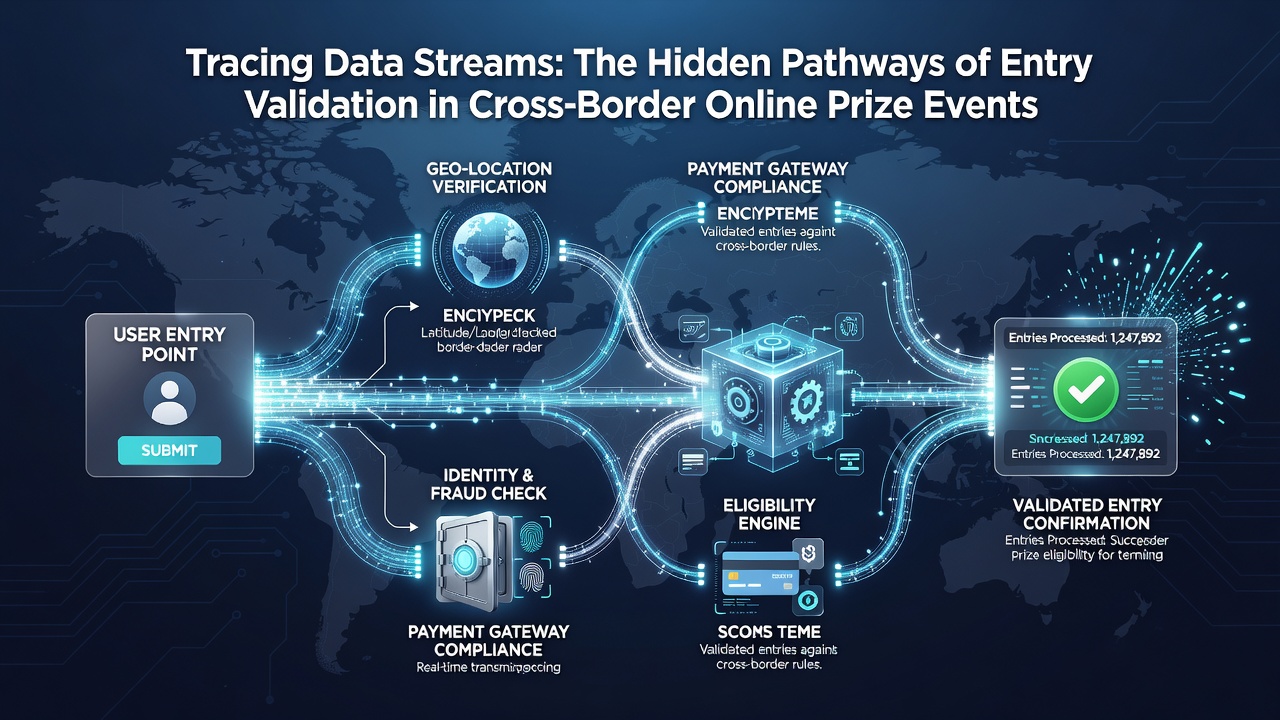
Jurisdictional differences create additional validation steps because prize promotions must satisfy regulations that vary widely between regions. Entries originating from countries with strict data protection statutes undergo extra scrutiny to ensure consent records align with applicable standards, and operators frequently segment databases so that information collected under one set of rules does not mix improperly with records governed by another. According to guidance published by the Federal Trade Commission, sponsors must maintain clear records demonstrating that each winner met eligibility criteria at the time of entry.
Firewalls and API gateways enforce these separations by tagging data streams with metadata that identifies the originating legal territory. When an entry crosses into a new region, the system triggers supplementary modules that verify compliance with local consumer protection statutes before allowing the record to proceed to the final selection pool.
Technical Mechanisms Behind Stream Verification
Real-time validation relies on a combination of cryptographic signing and distributed ledger references that confirm an entry has not been altered during transit. Hash values generated at the point of submission travel alongside the payload, and receiving servers recalculate these values to detect tampering. Machine learning classifiers examine behavioral signals such as typing speed and mouse movements to distinguish legitimate human entries from automated bots attempting mass submissions.
Operators integrate services from specialized vendors that supply geolocation intelligence accurate to city level, enabling precise exclusion of participants from restricted territories. These lookups occur within milliseconds, after which the validated record receives a unique token that permits it to advance toward random selection processes scheduled for later dates.
Developments Anticipated by Mid-2026
Industry reports indicate that by June 2026 many platforms will have adopted enhanced zero-knowledge proof techniques that allow verification of eligibility without exposing full personal details to every node in the data path. Pilot programs already demonstrate reduced latency while maintaining audit capabilities demanded by regulators across multiple continents. Such upgrades build on existing infrastructure yet introduce new checkpoints focused on consent granularity and cross-border data minimization.
Research institutions studying digital contest systems note that these evolving protocols reduce friction for legitimate entrants while strengthening defenses against fraudulent activity that previously exploited gaps in international coordination.
Conclusion
Data streams supporting entry validation in cross-border prize events form a coordinated sequence of captures, checks, and secure handoffs that together uphold fairness and legal compliance. Observers tracking these systems see continued refinement of both technical safeguards and procedural documentation as operators respond to shifting regulatory expectations worldwide. The pathways remain largely invisible to participants, yet they determine whether an entry ultimately qualifies for consideration in the prize draw.