Tracing Digital Footprints: Casino Entry Data and Its Route Through Layered Verification Systems
Ines Richter · Aug 7, 2026
Tracing Digital Footprints: Casino Entry Data and Its Route Through Layered Verification Systems
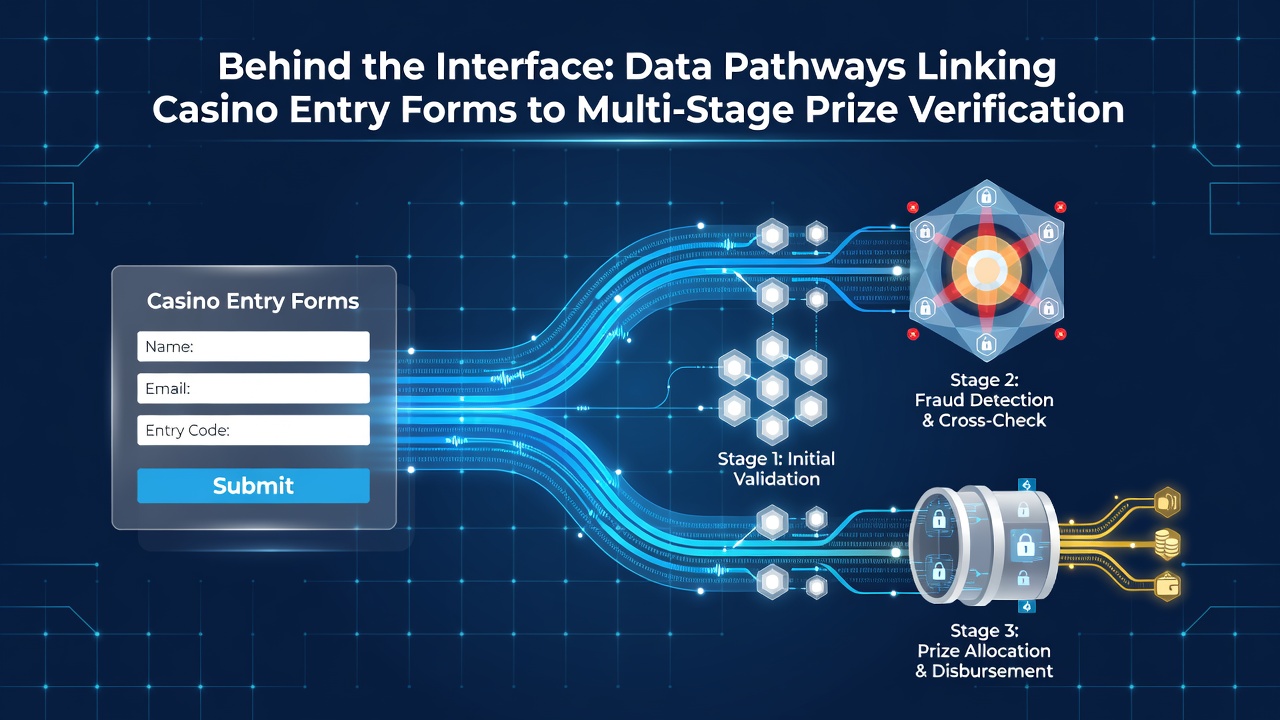
Entry forms in online casino promotions capture basic details such as names, addresses, and contact information, yet the real movement begins once that data enters centralized systems. Servers route these submissions through encrypted channels where initial checks scan for duplicates and eligibility markers before any further processing occurs. Researchers at various academic institutions have documented how these early filters reduce errors in later stages by flagging incomplete records immediately.
Initial Capture and Storage Mechanisms
Forms collect information through standardized fields that feed directly into relational databases maintained by platform operators. Timestamps and IP logs attach automatically to each record while geographic indicators help determine whether entries meet regional participation rules. Data then moves into secure repositories where indexing allows rapid retrieval during subsequent audits. Observers note that this structure supports high-volume events without creating bottlenecks in the early hours of a promotion launch.
Routing Through Multi-Stage Checks
Once stored, records advance along defined pathways that include automated validation scripts followed by human review queues. First-stage algorithms compare submitted details against existing winner lists and exclude entries that violate frequency limits. Second-stage processes incorporate external data sources such as address verification services and age confirmation databases. Third-stage reviews focus on prize-specific criteria including cumulative win caps and tax documentation requirements. Figures from industry reports reveal that roughly 15 to 20 percent of entries typically require manual intervention at one of these layers.
Security Protocols Along the Pathway
Encryption standards protect data packets during transit between modules while access controls restrict employee permissions to specific verification steps only. Audit trails record every query and modification so regulators can reconstruct the full history of any given entry. In August 2026 several North American gaming commissions updated their guidelines to require real-time logging of all data handoffs between entry intake and final approval. These changes align with similar frameworks already in place across parts of the European Union and select Australian states.

Multi-factor authentication gates each transition point so that no single system component can alter records without corresponding approvals elsewhere. Take one platform that integrated blockchain-based checksums last year; its operators reported a measurable drop in disputed claims because every change carried an immutable timestamp visible to both internal teams and external auditors.
Integration With External Verification Partners
Platforms frequently connect their internal pipelines to third-party services that handle address standardization, identity matching, and compliance screening. These handoffs occur through secure APIs that return standardized response codes indicating pass, fail, or review-needed status. Data sharing agreements specify retention periods and deletion triggers once verification concludes. Government agencies in Canada and several EU member states publish model contract language that operators adapt when establishing these partnerships.
Final Approval and Record Retention
After all stages clear an entry, the system generates a confirmation token that links the original form to the approved prize file. Operators archive these tokens alongside tax forms and payout receipts for periods required by local regulations, often ranging from three to seven years. Retrieval remains possible through indexed search tools that maintain separation between active promotions and historical records. Industry associations such as the European Gaming and Betting Association have issued technical briefs outlining best practices for long-term storage without compromising participant privacy.
Conclusion
The pathways linking entry forms to verified prizes rely on layered databases, automated scripts, and regulated external connections that together maintain accuracy across high volumes of submissions. Continued updates from regulatory bodies worldwide keep these systems aligned with evolving standards for security and transparency.